Ask any dealer what matters most in their internet lead process and you'll hear a dozen answers: the CRM, the follow-up scripts, the inventory feed, the AI tool they just bought. All of those matter. But the single metric that predicts conversion better than almost any other is also the simplest: how fast did you respond?
It's not a new idea. The data behind the five-minute rule has been around for more than a decade. What's changed is how many dealerships still aren't acting on it, even as the tools to fix it have gotten better and cheaper.
What The Five-Minute Rule Actually Says
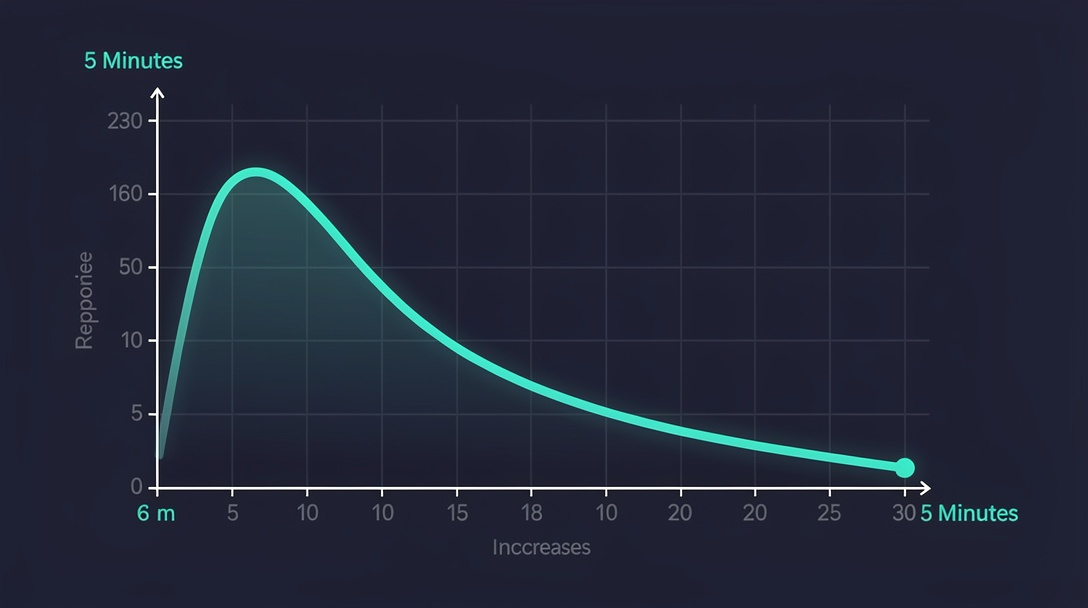
The principle is straightforward: a lead contacted within five minutes of submitting an inquiry is dramatically more likely to be reached and qualified than one contacted even thirty minutes later. Wait an hour, and the odds fall off a cliff.
The reason is human, not technical. When someone fills out a form on your site, they're engaged right now. They're at their desk, on their couch, in your competitor's parking lot, actively thinking about a vehicle. Five minutes later they're still in that headspace. An hour later, they've moved on, or worse, they've already heard back from the dealership down the road.
The Perception Gap
Here's the part that catches most dealers off guard. When we ask a store how quickly they respond to leads, the answer is almost always "fast, usually within a few minutes." When we actually measure it, the real number is frequently thirty minutes, an hour, or longer, especially once you account for nights and weekends.
That gap between perceived and actual response time is where deals quietly disappear. Nobody decides to respond slowly. It happens because the person who handles leads was with a customer, or it was after hours, or the lead landed in a queue nobody was watching. The intent was there. The coverage wasn't.
Why Speed Is A Process Problem, Not An Effort Problem
The instinct when response time is slow is to tell the team to try harder. That rarely works, because the problem usually isn't effort. Your salespeople are busy selling. Your BDC, if you have one, is juggling inbound calls and outbound follow-up at the same time. Asking them to also guarantee a five-minute response on every web lead, at every hour, is asking for the impossible without the right structure.
This is exactly the kind of gap our Sales BDC is designed to close. Speed to lead isn't about one heroic effort, it's about having trained people in place, with the coverage and the process to respond consistently, the first time, every time, including the nights and weekends where most stores fall down.
Where The Rule Breaks Most: After Hours
If you want to find the biggest opportunity in your lead process, look at what happens to a lead that comes in at 8 p.m. on a Saturday. At a lot of dealerships, that lead waits until Monday morning. By then it's cold, and the customer may have already booked elsewhere.
The dealerships winning those leads aren't necessarily bigger or better funded. They've just made sure someone, or something, responds the right way around the clock. An instant AI acknowledgment buys you a few minutes of goodwill. A real human follow-up shortly after is what turns it into an appointment.
How To Start Closing The Gap
You don't need to overhaul everything at once. Start here:
- Measure your true response time. Compare lead-received timestamps to first genuine human contact. Be honest about nights and weekends.
- Separate the instant touch from the real follow-up. Use automation for the acknowledgment, but make sure a trained person owns the conversation that follows.
- Fix the coverage gaps first. The after-hours and weekend leads are usually where the biggest, cheapest wins are.
If measuring it reveals a structural problem rather than a quick fix, that's worth diagnosing properly. Our consulting engagements start exactly there: finding where your process leaks leads and building the plan to seal it.
The five-minute rule isn't glamorous. There's no new platform to buy, no dashboard to admire. It's just the discipline of being there when the customer is ready. Get that right, and a surprising number of your other metrics start improving on their own.